
Everyday care
Can your menstrual cycle affect sleep? What the evidence says
Learn how the menstrual cycle can affect sleep, why rest may change before a period, what to track, and when sleep problems deserve medical support.
Key takeaways
- Sleep can change in the days before a period and during bleeding, but there is no phase that is reliably best or worst for everyone.
- Reported sleep and measured sleep often disagree. Many lab studies of healthy participants find no large cycle-related change in objective sleep continuity.
- The disruptor is often the symptom, not the hormone — cramps, heat, headaches, bloating and mood all get in the way of a night.
- A wearable score is not a diagnosis. Look for a repeating cluster, such as three bad nights before bleeding across three cycles.
Yes, the menstrual cycle can affect sleep, especially in the days before a period and during bleeding. Some people notice trouble falling asleep, more awakenings, sleeping more or less, or extra tiredness. Others notice no consistent change at all.
The evidence is more nuanced than a phase-by-phase sleep schedule. Hormone shifts, body temperature, cramps, headaches, mood symptoms, and daily life can all influence rest. Research also finds that people's reports of worse sleep do not always match changes measured in a sleep laboratory. A calendar or wearable may reveal a pattern, but it cannot prove that the cycle caused a poor night.
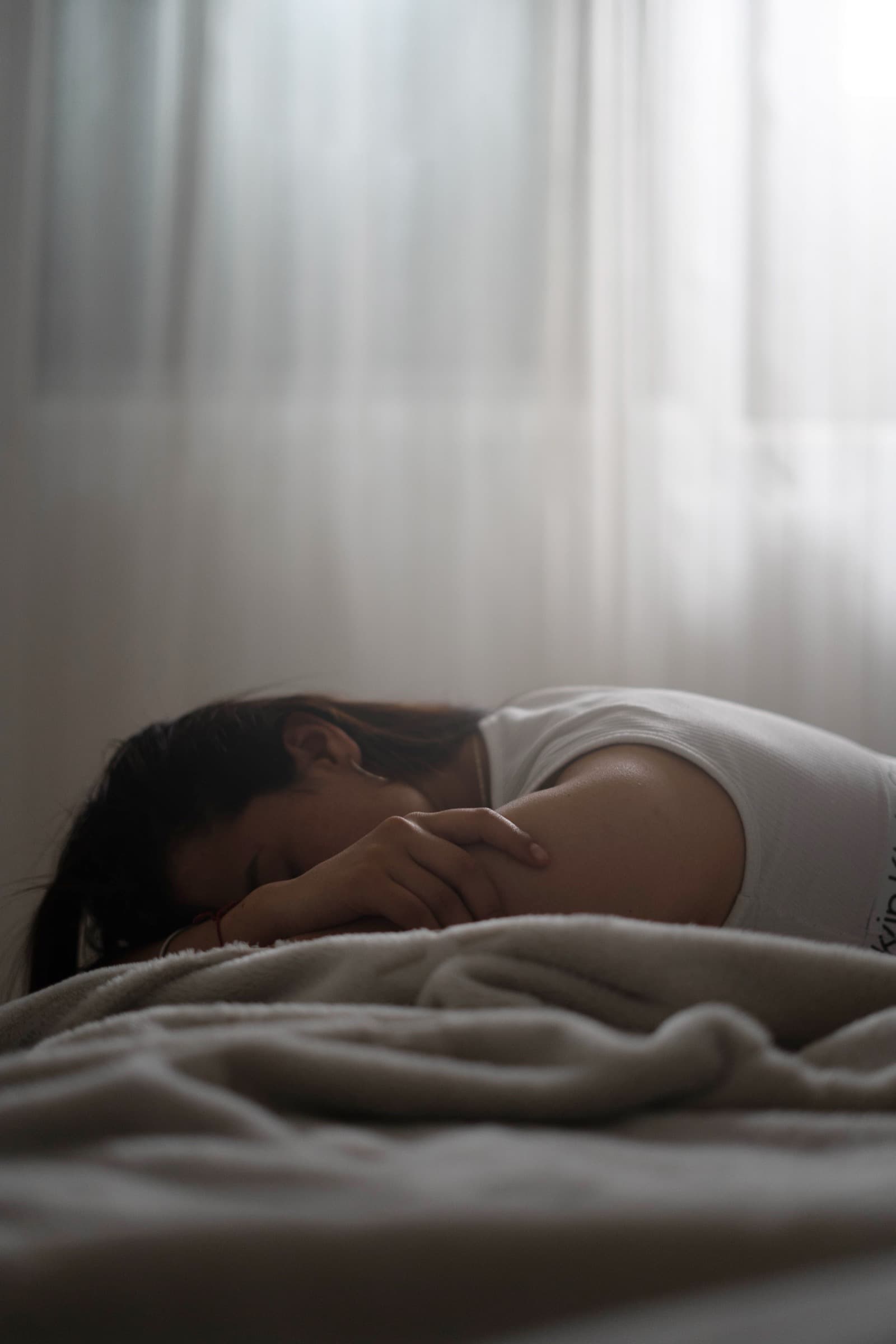
How can the menstrual cycle change sleep?
The menstrual cycle involves changing levels of estrogen and progesterone. After ovulation, progesterone rises during the luteal phase and core body temperature is slightly higher than earlier in the cycle. Both hormone signaling and temperature regulation interact with sleep, but they do not create the same experience for everyone.
A scientific review of menstrual-cycle effects on sleep found changes in both subjective and objective measures. It also emphasized variation between individuals and differences between people with and without premenstrual symptoms. In other words, a biological connection is plausible and measurable, but there is no universal "best" or "worst" sleep phase.
The clearest everyday pattern is often premenstrual. The U.S. Office on Women's Health lists sleeping too much or too little among possible PMS symptoms. These symptoms happen after ovulation and before a period, then usually ease within a few days after bleeding begins. Trouble sleeping can also occur with PMDD, a more severe premenstrual condition that substantially affects daily life.
If you want a refresher on the timing, see the four phases of the menstrual cycle. Remember that phases vary in length, and ovulation cannot be confirmed from a predicted date alone.
Why sleep may feel worse before or during a period
There may be more than one reason for disrupted sleep.
Hormone and temperature changes
Progesterone has a temperature-raising effect after ovulation. The usual overnight fall in core temperature is also smaller during the luteal phase. Researchers continue to study how these changes relate to sleep architecture and perceived sleep quality. They do not justify precise claims that everyone will sleep badly on specific cycle days.
Cramps and other physical symptoms
Pain, bloating, breast tenderness, headaches, digestive changes, or heavier bleeding can make it harder to settle or stay asleep. In this situation, the symptom may be the immediate sleep disruptor even though its timing is cycle-related. If pain is the main problem, this guide to period cramps and when they need attention may help you organize the next steps.
Mood and premenstrual symptoms
Anxiety, low mood, irritability, and sleep trouble can occur together before a period. Poor sleep may then make fatigue and mood symptoms feel harder to manage. A repeating pattern matters more than one difficult night. PMS and PMDD are not the same, and neither can be identified from sleep data alone.
Factors unrelated to the cycle
Stress, shift work, travel, alcohol, caffeine, illness, medicines, caring responsibilities, room temperature, and an existing sleep disorder can all affect rest. A cycle date appearing next to poor sleep is useful context, not proof of cause.
What sleep research and wearables can tell you
Sleep research uses several kinds of information. A diary captures how rested you feel and how long you think it took to fall asleep. Actigraphy estimates sleep and wake from movement. Polysomnography measures brain activity, breathing, heart rate, and other signals in a sleep laboratory.
These methods do not always tell the same story. Reviews describe premenstrual worsening in perceived sleep for some people, while many studies of healthy participants do not find large cycle-related changes in objective sleep continuity. Research is also limited by small samples, different definitions of cycle phases, and imperfect confirmation of ovulation.
A watch or ring can be useful for noticing a personal pattern, but consumer estimates are not a diagnosis. Avoid treating a nightly score as a verdict on your health. How you feel and function during the day matters too.
Can poor sleep make periods irregular?
Studies have found associations between sleep disturbance and menstrual concerns such as PMS, painful periods, heavy bleeding, and irregular cycles. That does not establish which came first or whether one directly caused the other. Many studies are observational, and stress, work schedules, health conditions, and other factors may affect both sleep and periods.
A single short night does not prove that sleep changed a menstrual cycle. If sleep and cycle timing both change, record the pattern and consider the wider context rather than assuming one explains the other. A general period tracker cannot diagnose the cause or confirm ovulation, and its fertility predictions are estimates, not contraception.
A useful sleep-and-cycle tracking checklist
Track only enough detail to answer a question. For two or three cycles, you might record:
- Cycle dates — the first day of each period, and how many days you bled
- Bedtime and wake time, approximately
- Time to fall asleep, as far as you can tell
- Night awakenings, and whether pain, heat, or another symptom woke you
- How you felt — morning restfulness and daytime sleepiness on a simple 0-to-3 scale
- Symptoms — cramps, headaches, mood changes, flow, and other premenstrual signs
- Confounders — late caffeine or alcohol, shift changes, travel, illness, or major stress
- Changes — relevant medicine or contraception
Look for a repeating cluster rather than a perfect graph. For example, "difficulty falling asleep for three nights before bleeding in three cycles" is more useful than a collection of isolated wearable scores. If tracking increases anxiety, scale it back. Flowy can keep cycle dates and a few chosen symptoms together, but it does not diagnose PMS, PMDD, insomnia, or another condition.
Practical ways to support sleep
Good sleep habits are useful throughout the month, including when symptoms are more noticeable. The National Heart, Lung, and Blood Institute recommends keeping a consistent sleep schedule, using the hour before bed for quiet time, avoiding bright artificial light, limiting heavy meals and alcohol near bedtime, and avoiding late caffeine. A cool, quiet, dark room can also help.
Make the plan realistic. If cramps wake you, address pain with advice appropriate for you from a pharmacist or healthcare professional. If changing sheets or period products interrupts sleep, prepare what you need beside the bed. Avoid starting supplements or sleep medicines solely because an app predicts a certain phase. Supplements can interact with medicines, and sleep aids do not solve every cause of poor sleep.
When to contact a healthcare professional
Arrange an appointment if:
- Months of poor sleep, unchanged by better sleep habits, or affecting daily life
- A premenstrual pattern that interferes with work, school, relationships, or usual activities
- Sleeping much more or less than usual around your period
- Signs of another sleep problem — loud snoring, gasping, breathing pauses, uncomfortable leg sensations, or severe daytime sleepiness
- A symptom is the real cause — cramps, headaches, mood symptoms, or bleeding keeping you awake
- Periods have also changed — persistently irregular, very heavy, or absent
A clinician may ask about both nighttime sleep and daytime function, along with pain, bleeding, mood, medicines, contraception, pregnancy possibility, and other health changes. Bring a brief diary if you have one.
Seek urgent local help if premenstrual symptoms include thoughts of suicide or you feel unable to keep yourself safe. This is not something to wait out until the period starts.
Frequently asked questions
Is it normal to sleep badly before a period?
Trouble sleeping can be a PMS symptom, but it is not inevitable and "common" does not mean you have to ignore it. Track whether it repeats and how much it affects daytime life. Persistent or disruptive symptoms deserve medical support.
Which menstrual phase is best for sleep?
There is no reliable phase that is best for everyone. Studies find some cycle-related changes, but results differ by person, symptoms, and measurement method. Your own repeated pattern is more informative than a generic phase chart.
Can a sleep tracker predict a period or ovulation?
Temperature and sleep data may contribute to an estimate, but a consumer tracker cannot confirm ovulation from sleep alone. Predictions can shift, especially with irregular cycles, illness, travel, or incomplete data. Do not use a general cycle or sleep tracker as contraception.
This article is for general education only. It is not a diagnosis, individualized medical advice, or a substitute for care from a qualified healthcare professional.
References
- U.S. Office on Women's Health: Premenstrual syndrome
- NHS: Premenstrual syndrome
- Sleep Medicine Clinics: Menstrual cycle effects on sleep
- International Journal of Environmental Research and Public Health: Menstrual disturbances and sleep disturbances, a systematic review
- National Heart, Lung, and Blood Institute: Healthy sleep habits
- NHS: Insomnia