
Everyday care
Why you can't sleep the week before your period
How late-luteal hormone shifts, a warmer body at night and premenstrual symptoms can break up sleep, what research cannot yet explain, and what to try.
Key takeaways
- Premenstrual insomnia is common but not universal. In one study of 213 people, 29% slept worse around their period, 25% slept worse mid-cycle, and 46% showed no cycle-related pattern at all.
- Body temperature runs about 0.4°C higher in the luteal phase and falls less overnight, so a cooler bedroom and lighter bedding are a reasonable first change for the premenstrual week.
- Sleep trouble that arrives with severe mood symptoms before most periods can be part of PMDD, which is diagnosed from daily symptom ratings kept over at least two cycles.
- The NHS advises seeing a GP if poor sleep lasts for months or makes daily life hard to cope with. NICE recommends cognitive behavioural therapy for insomnia (CBTi) as the first-line treatment.
If you lie awake or wake repeatedly in the days before your period, you are describing something researchers have measured. Reviews of the evidence find that poor sleep is reported more often in the last few premenstrual days and the first days of bleeding than at other points in the cycle. The most likely contributors are the fall in progesterone and estrogen at the end of the luteal phase, a body temperature that stays higher at night, and premenstrual symptoms such as low mood, anxiety, headaches, breast tenderness and cramps.
What the research does not support is a single, tidy cause. Many people show no cycle-related change in sleep, and lab measurements often find less disruption than people report. That does not mean the bad nights are imagined. It usually means several factors are adding up, some of which you can change.
This piece focuses on the premenstrual week specifically. For how sleep can vary across the whole cycle, see our overview of the menstrual cycle and sleep.
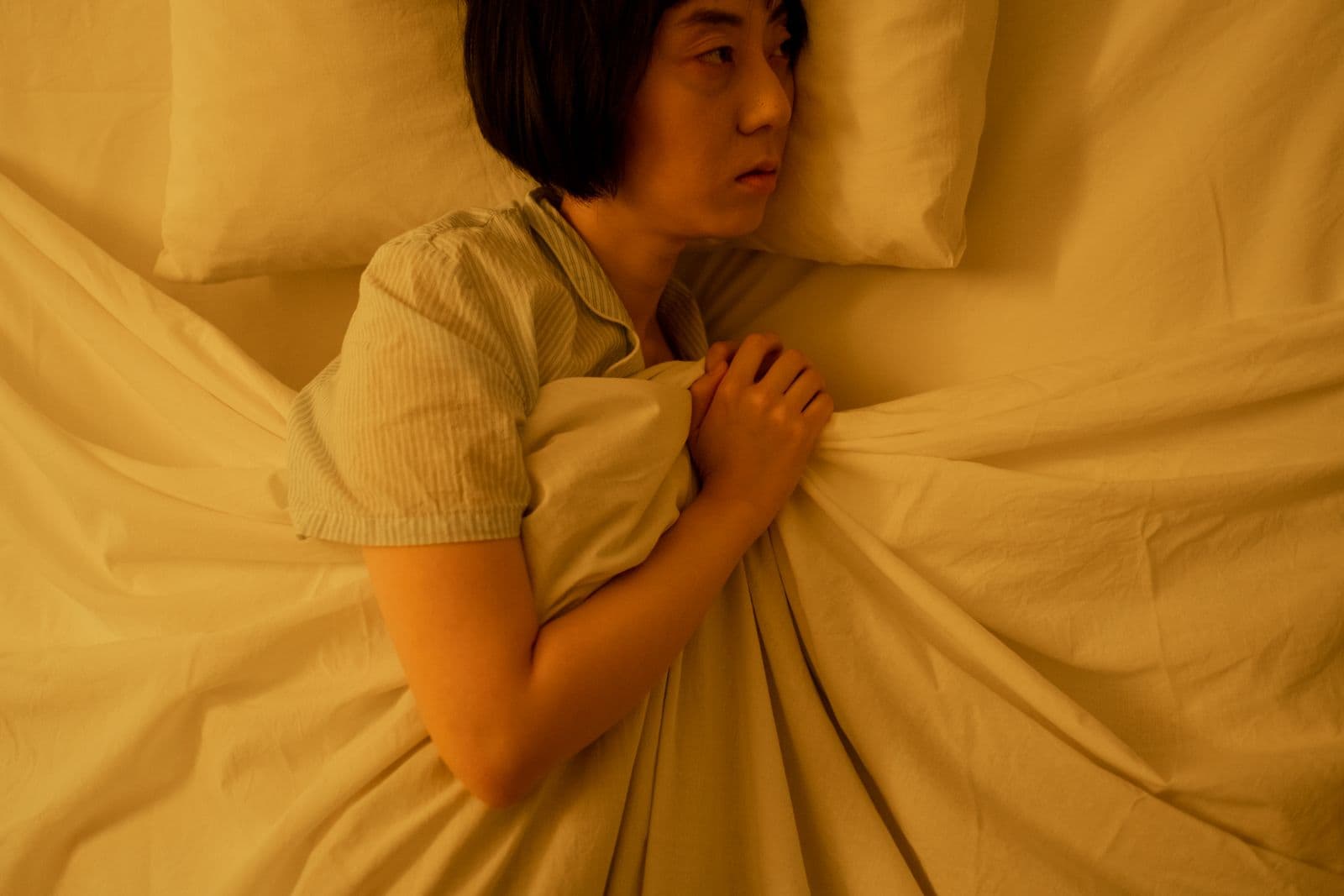
How common is poor sleep before a period?
It is common, but it is not the norm for everyone. A 2023 review in Sleep Medicine Clinics by Alzueta and Baker describes a study of 213 people that tracked self-reported sleep difficulty across the cycle and found three separate patterns:
| Pattern of sleep difficulty | Share of participants |
|---|---|
| No link with the cycle | 46% |
| Worse around the middle of the cycle | 25% |
| Worse in the days around the period | 29% |
If your worst nights fall before bleeding, you are in a large group, but not a universal one. The review notes that sleep complaints cluster in people with moderate to severe premenstrual symptoms, painful periods or irregular cycles.
The strongest predictor of a bad premenstrual night is usually another premenstrual symptom, not the calendar date.
What is happening in your body that week?
Falling hormones rather than low hormones
After ovulation, progesterone rises, then falls with estrogen in the last days of the cycle if there is no pregnancy. Alzueta and Baker note that the change in these hormones, rather than their absolute level, may be what matters for sleep quality in the late luteal phase. That is a cautious "may": no particular hormone level has been shown to cause insomnia.
A warmer body at night
Progesterone raises body temperature. The same review puts the luteal-phase increase at about 0.4°C, with a smaller drop overnight than in the first half of the cycle. The US National Institute of Neurological Disorders and Stroke explains that circadian rhythms govern body temperature as well as wakefulness, and that body temperature drops as you move into sleep. Some lab studies also find less REM sleep in the luteal phase, which researchers think may relate to the raised temperature, because the body sheds heat less well during REM.
None of this proves heat is why you are awake, but a warm room or heavy bedding may make an already warmer body harder to settle.
Melatonin and cortisol: weaker evidence than you may have read
Claims that melatonin drops or cortisol spikes before a period go beyond the evidence. In controlled studies of healthy young women, the timing and amplitude of the melatonin rhythm did not differ between the two halves of the cycle. The differences found so far are mainly in premenstrual dysphoric disorder (PMDD), where Shechter and Boivin's group reported lower night-time melatonin and another team reported shifted timing of melatonin and cortisol rhythms. These are leads for larger trials, not an explanation for ordinary premenstrual waking.
Why lab results and your own nights can disagree
Most sleep-laboratory studies of young people without premenstrual complaints find little change across the cycle in how long it takes to fall asleep, how often they wake, or how efficiently they sleep. A 2018 review by Baker and Lee found that poorer sleep quality before and during a period is common specifically in people with premenstrual symptoms or painful cramps. A few extra awakenings can feel far worse when you are also anxious, sore or low.
Measured changes do appear in some groups: in the US SWAN study of 163 women aged 48 to 59 who were still having periods, wrist-worn trackers showed a 5% drop in sleep efficiency and about 25 minutes less sleep in the premenstrual week compared with the week before. Premenstrual sleep changes may become more noticeable as you approach perimenopause, which is covered in our guide to perimenopause and period changes.
Night sweats before your period
Waking hot in a warm room is not a night sweat. The NHS says sweating at night is normal if the room or bedding is too hot, and describes night sweats as soaking your nightclothes and bedding even though the room is cool. The NHS lists hot flushes and night sweats among the symptoms of perimenopause, the stage when periods are changing but have not stopped. Anxiety, some medicines, low blood sugar and alcohol are other common causes.
If you regularly wake drenched in a cool room, that is worth checking with a GP whether or not it lines up with your cycle.
When premenstrual insomnia may be PMS or PMDD
The US Office on Women's Health lists sleeping too much or too little among the symptoms of premenstrual syndrome, and describes PMS symptoms as appearing in the days before a period across several cycles in a row. PMDD is a more severe condition affecting an estimated 3% to 8% of people who menstruate, according to Alzueta and Baker. Insomnia or sleeping too much is one of its listed symptoms, alongside at least one mood symptom, and a diagnosis requires symptoms to be documented for at least two consecutive cycles.
In one study of university students, 80.5% of those with severe PMS or PMDD reported poor sleep quality, against 56.4% of those without. If sleeplessness arrives with intense irritability, hopelessness or anxiety that lifts once bleeding starts, our guide to PMS versus PMDD explains what a clinician will ask for.
What you can do in the week before your period
The NHS advice for insomnia applies, with a few points worth extra weight that week:
- Cooler bedroom, since the NHS lists a room that is too hot among the common causes of insomnia and your body is running warmer
- Lighter layers, so you can remove a blanket rather than wake too hot to get back to sleep
- Same wake time, including after a bad night, rather than sleeping in
- An hour to wind down, such as a book or a bath, finished early enough for your body to cool afterwards
- No caffeine or alcohol in the six hours before bed, as the NHS recommends
- Pain treated before bed, because painful periods are linked to measurably lower sleep efficiency, and in one study treating the pain improved sleep; see our guide to period cramps
The NHS says pharmacy sleeping aids may help for one to two weeks at most, and to check with a doctor first.
What to record over two or three cycles
NICE notes that a sleep diary kept for one to two weeks can help identify sleep patterns. To see a premenstrual pattern, you need enough cycles to tell whether the bad nights repeat.
- Period start dates, so each night can be counted back from bleeding
- How the night went, in the same few words every time
- Time asleep, even as a rough estimate
- What else was happening, such as pain, hot or sweaty nights, low mood, alcohol or a late shift
In the Flowy day log you can pick a sleep quality (trouble sleeping, restless sleep, woke up tired, woke up refreshed or slept well), enter a sleep duration and add notes, so each night sits beside your cycle dates. If you connect Apple Health, Flowy reads only the sleep samples you allow and writes nothing back. It cannot tell you why you slept badly, diagnose insomnia or PMDD, or confirm a hormonal cause, and its cycle estimates are not birth control.
When to contact a healthcare professional
| What you notice | Suggested next step |
|---|---|
| A few restless nights before most periods | Try the changes above and keep a record for two or three cycles |
| Poor sleep for months, or daily life hard to cope with | See a GP, as the NHS advises |
| Sleeplessness with severe mood symptoms before most periods | Ask about PMS and PMDD and bring your record |
| Soaking night sweats in a cool room | See a GP |
| Night sweats with fever, a cough, diarrhoea or weight loss you cannot explain | See a GP |
NICE recommends cognitive behavioural therapy for insomnia (CBTi) as the first-line treatment for long-term insomnia, and notes that its benefits last after treatment ends, unlike those of medication. A GP should also consider other sleep disorders, such as sleep apnoea. If you ever have thoughts of harming yourself, seek help urgently.
Frequently asked questions
Is it normal not to sleep the week before your period?
It is common, particularly if you have other premenstrual symptoms, but it is not universal. Nearly half of the participants in one study showed no cycle-related sleep pattern.
Does progesterone make you sleepy or keep you awake?
There is no simple answer. Reviews suggest the late-luteal fall may matter more than the level itself, and the temperature rise progesterone causes may also play a part.
Should I take melatonin for premenstrual insomnia?
There is not enough evidence to recommend it. Controlled studies found no cycle-related change in the melatonin rhythm in healthy young women, and trials in PMDD are too small to guide treatment. Ask a GP or pharmacist before taking any sleep aid.
The short version
Poor sleep before a period is common, measurable in some people and absent in many others. Falling hormones, a warmer body and other premenstrual symptoms are the best-supported explanations, but none is proven as the single cause. Keep the bedroom cool and your wake time steady, treat pain, record a few cycles, and see a GP if it lasts for months or comes with severe mood symptoms.
This article is for general education only. It is not a diagnosis, individualised medical advice, or a substitute for care from a qualified healthcare professional.
References
- Sleep Medicine Clinics (2023): The menstrual cycle and sleep, Alzueta and Baker
- Sleep Medicine Clinics (2018): Menstrual cycle effects on sleep, Baker and Lee
- International Journal of Endocrinology (2010): Sleep, hormones, and circadian rhythms throughout the menstrual cycle in healthy women and women with PMDD, Shechter and Boivin
- NHS: Insomnia
- NHS: Night sweats
- NHS: Menopause symptoms
- NICE Clinical Knowledge Summaries: Insomnia
- U.S. Office on Women's Health: Premenstrual syndrome
- National Institute of Neurological Disorders and Stroke: Brain basics, understanding sleep