
Cycle health
When your ADHD medication feels weaker before your period
Why stimulant response can feel weaker in the luteal phase, how thin the evidence still is, what to record, and what to bring to your prescriber.
Key takeaways
- A 2024 review in Hormones and Behavior proposes that rapid falls in oestrogen before a period reduce dopamine signalling, which is the most likely reason ADHD symptoms and stimulant response feel worse premenstrually. It is a well-argued theory, not a settled mechanism.
- The only published evidence for adjusting stimulant dose across the cycle is a nine-person case series from one Dutch clinic, published in Frontiers in Psychiatry in 2023. That is a reason to raise it with a prescriber, not a reason to change your own dose.
- NICE guideline NG87 says ADHD medication should be started and titrated by a specialist and reviewed at least once a year. The NHS says not to stop methylphenidate without talking to your doctor first.
- Record a daily 0 to 10 focus rating, your dose and timing, mood, sleep, and cycle day for two or three cycles. A visible premenstrual dip in that record is what turns a vague complaint into a productive medication review.
If your ADHD medication seems to stop working in the week before your period, you are describing something clinicians now recognise and researchers have only recently started to measure. Symptom ratings and cognitive tests worsen in the days before menstruation in the small studies that have looked, and a plausible mechanism exists: oestrogen supports dopamine signalling in the brain, oestrogen falls sharply in the late luteal phase, and stimulant medication works on dopamine.
What does not yet exist is good evidence about what to do about it. The research on adjusting stimulant doses across the cycle amounts to nine women in one clinic. That is enough to justify a conversation with the person who prescribes your medication. It is not enough to justify changing your own dose, and a 2025 review in the Journal of Clinical Medicine describes the whole evidence base as preliminary and sometimes contradictory.
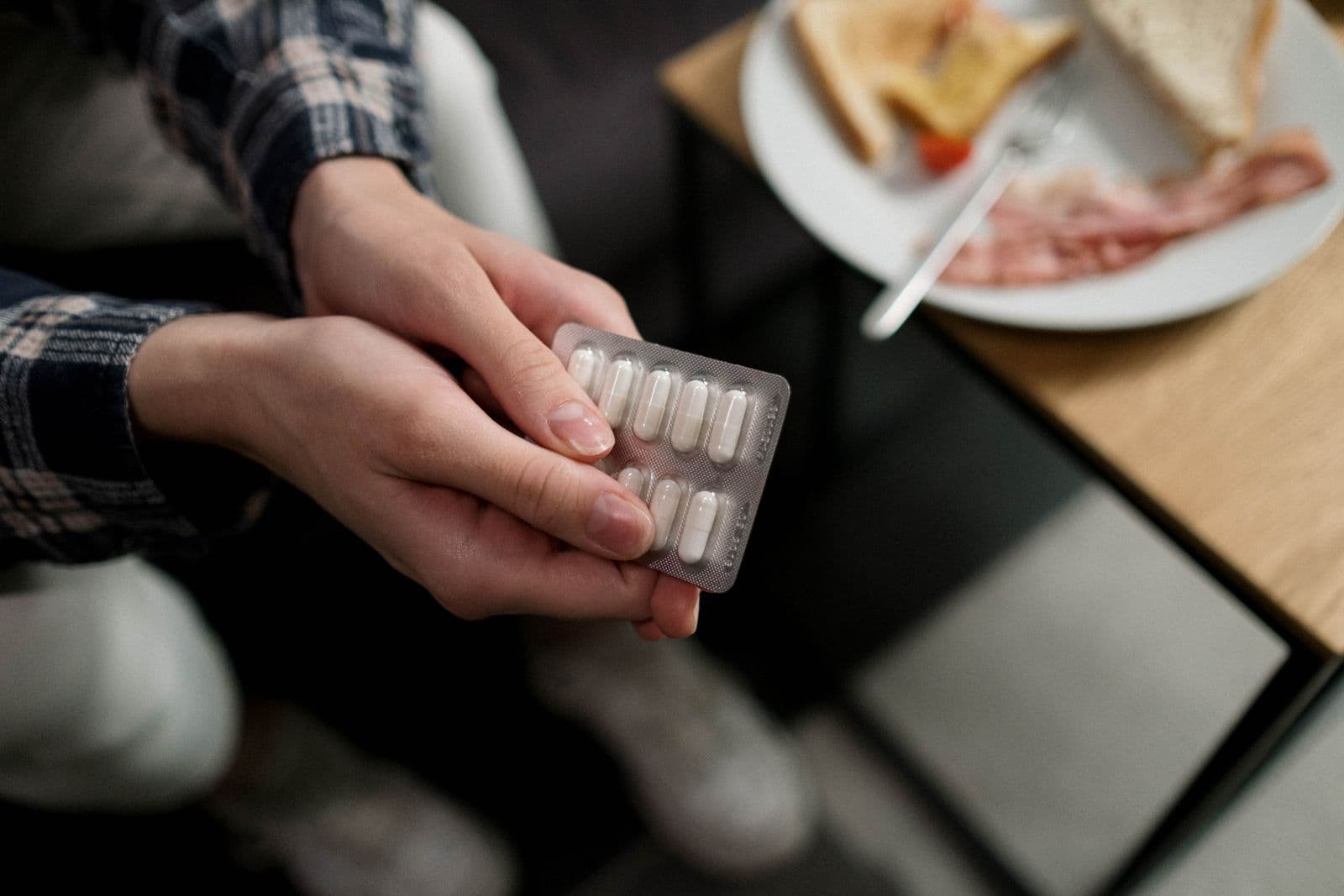
Why the week before a period can feel different
The luteal phase runs from ovulation to the first day of your next period, typically 12 to 14 days. Progesterone rises through the first half of it and then, if there is no pregnancy, both progesterone and oestrogen fall over the final few days. That late fall is the window most people mean when they say their medication has stopped working. If you want the full cycle laid out, the four phases of the menstrual cycle covers it.
Oestrogen is not only a reproductive hormone. In the brain it supports dopamine release and receptor density, ADHD involves differences in dopamine signalling, and stimulants such as methylphenidate and lisdexamfetamine work by increasing the dopamine and noradrenaline available between neurons. Put those three facts together and you get the working theory: when oestrogen drops, there is less dopamine for the medication to work with, so the same dose feels like less.
A 2024 theory paper in Hormones and Behavior by Eng and colleagues at the University of Kentucky sets this out formally, proposing that ADHD symptoms worsen at two points of rapid oestrogen decline, around ovulation and in the days before a period, with inattention most affected premenstrually. The authors call it a theory, and that is the honest label. The studies it rests on are small.
What the research shows, and how small it is
The evidence base has three layers, and they are not equally strong.
| Type of evidence | What it found | What it cannot tell you |
|---|---|---|
| Symptom studies across the cycle | Small samples of women with ADHD rate inattention and impulsivity worse premenstrually, matched by worse scores on cognitive tasks | Whether medication response, rather than baseline symptoms, is what changes |
| Hormone and stimulant studies | Oestrogen and progesterone appear to alter how the body handles and responds to amphetamine-type drugs | Whether the effect is large enough to matter at prescribed doses |
| Dose-adjustment studies | A nine-woman case series reported better premenstrual symptoms with a temporarily raised dose under monitoring | Whether it is safe or effective for anyone outside that clinic |
The symptom studies are the most consistent. A 2025 narrative review in the Journal of Clinical Medicine found four studies in women with ADHD showing worse attention, executive function and impulsivity in the mid-luteal and premenstrual phases. A 2025 pilot in the Journal of Attention Disorders followed 30 women taking amphetamine salts for 35 days and found symptoms most severe around menstruation and mildest in the mid-follicular phase, tracking closely with negative mood. The Kentucky group has also presented follow-up data in 97 women showing the same pattern, not yet published in a peer-reviewed journal at the time of writing.
The medication evidence is thinner and mostly indirect: hormone measurements, or older laboratory studies of how healthy volunteers respond to amphetamine at different points in the cycle. It supports the theory. It does not measure what happens to a person on a stable prescription.
The dose-adjustment evidence is the part most often overstated. The 2023 report in Frontiers in Psychiatry by de Jong and colleagues describes nine consecutive women at a Dutch adult ADHD clinic whose prescribed stimulant dose was raised in the premenstrual week under monitoring, with improved inattention, irritability and energy and few side effects over six to 24 months. The authors call it a community case study and a preliminary result. Nine women, with no control group, is a promising signal and nothing more.
What is not settled
Before you conclude the medication is the problem, there are several things this evidence cannot yet answer.
- Whether it is the medication at all. ADHD and premenstrual syndrome overlap. A 2021 study of 209 women with ADHD in the Journal of Psychiatric Research found high rates of premenstrual mood symptoms alongside more severe symptoms around childbirth and the menopause transition. If your baseline ADHD symptoms worsen premenstrually, medication that does the same job as always will still feel weaker, because there is more to treat.
- Whether PMDD is part of the picture. Premenstrual dysphoric disorder appears more common in people with ADHD, and its symptoms (irritability, low mood, feeling overwhelmed) are easy to read as ADHD getting worse. How PMDD is diagnosed explains why two cycles of daily ratings are needed to tell.
- Whether sleep is doing the work. Sleep often deteriorates in the luteal phase, and poor sleep worsens attention independently of ADHD. The menstrual cycle and sleep covers what changes and why.
- Who this applies to. Almost all the research is in women in their twenties not using hormonal contraception. There is very little data on adolescents, on hormonal contraception users, or on the perimenopause, where the same mechanism may operate for longer stretches. If you are in your forties and noticing this for the first time, read perimenopause cycle changes alongside this.
Why you should not adjust the dose yourself
Stimulants are controlled medicines in the UK and most other countries. NICE guideline NG87 says ADHD medication should be started by a healthcare professional with training and expertise in ADHD, titrated against symptoms and adverse effects until the dose is optimised, and reviewed at least once a year. The NHS page on methylphenidate for adults says not to stop taking it without talking to your doctor first. Neither body has guidance on cycle-based dosing, because the evidence to write it does not exist yet.
The practical problems with adjusting on your own are concrete:
- Prescription arithmetic. Taking extra one week means running short later, and it damages trust in a treatment that depends on it.
- Cardiovascular monitoring. Stimulants raise heart rate and blood pressure. NICE asks for these to be monitored, and a higher dose one week in four is a change your clinician needs to know about.
- Missing the real cause. If the problem is PMDD, sleep, or undertreated baseline ADHD, a bigger dose in one week does not address it and may add side effects.
- No follow-up. The nine women in the Dutch series were monitored for six to 24 months. An unmonitored change at home has none of that.
None of this means the idea is wrong. It means it is a decision for a prescriber, made with your record in front of them.
What to record for two or three cycles
A prescriber can act on a pattern. They cannot act on "it feels weaker sometimes." Two or three cycles of a few daily entries is enough to show whether the dip is real, when it happens, and how big it is.
- Focus rating, one number from 0 to 10 for how well your medication seemed to work that day
- Dose and timing, especially if you took it later than usual, skipped it, or ate differently around it
- Mood, using whichever words fit: irritable, anxious, sad, calm, fine
- Energy, from exhausted to energised
- Sleep, whether you slept well, woke up tired, or had trouble getting to sleep
- Cycle day, and the first day of bleeding when it comes
In Flowy, mood, energy and sleep are built-in daily entries, and cycle day is calculated from the period starts you log. Flowy has no medication field, so the focus rating and dose go in the free-text note for the day. Everything you enter can be exported for an appointment. The app cannot measure hormones, cannot tell you whether your medication is working, and cannot tell ADHD from PMDD. It can show the same few numbers next to your cycle day for eight or twelve weeks, which is what your prescriber actually needs.
Then look for two things. Does the focus rating drop in the last five to seven days before bleeding and recover once it starts? And is the drop bigger than ordinary day-to-day noise? A one-point wobble is normal. A consistent three-point fall that lines up with cycle day is a pattern.
What to ask your prescriber
Bring the record and ask specific questions:
- Does my record show a premenstrual dip, or is it within normal variation?
- Could this be PMDD or premenstrual low mood rather than reduced medication effect, and how would we tell?
- Is my baseline dose optimised for the whole cycle, rather than needing a change for one week?
- Have you seen the 2023 case series on premenstrual dose adjustment, and is it something you would consider with monitoring?
- If I am using or considering hormonal contraception, would steadier hormone levels be expected to change this?
If your ADHD care is under a shared care arrangement, your GP may need to refer the question back to the specialist. The NHS describes shared care as the normal arrangement, so this is a routine request.
Contact a healthcare professional sooner if you notice chest pain, palpitations, or fainting at any point in the cycle, if premenstrual low mood includes thoughts of self-harm, or if you have already been taking more than your prescribed dose and want help stopping safely.
Frequently asked questions
Is it normal for ADHD medication to feel less effective before a period?
Small studies suggest ADHD symptoms worsen in the days before menstruation, and many clinicians report patients describing weaker medication effect in the same window. It is common enough to be taken seriously, but the research has not yet separated weaker medication response from worse baseline symptoms.
Should I take a higher dose in the week before my period?
Not on your own. The only evidence is a nine-person case series under clinical monitoring. NICE asks for stimulant doses to be titrated and reviewed by a specialist, and the NHS advises against changing methylphenidate without medical advice. Raise it with your prescriber and bring a record.
Could this be PMDD instead of ADHD?
It could be either, or both. PMDD is more common in people with ADHD, and its symptoms overlap with ADHD getting worse. Two cycles of daily ratings, the same record described above, are what a clinician needs to distinguish them.
Does hormonal contraception help?
It is a reasonable question to ask, because combined hormonal contraception flattens the oestrogen fall that the theory blames. It has not been studied for this purpose in people with ADHD, so nobody can tell you it will work.
Can a cycle-tracking app tell me whether my medication is working?
No. An app can hold your daily ratings next to your cycle day so a pattern is visible. It cannot measure hormones or medication levels, and it cannot diagnose anything.
The record is the point
The theory that falling oestrogen weakens the effect of stimulant medication is coherent and taken seriously by the researchers working on it. The evidence for what to do about it is at the case-series stage. In that gap, the most useful thing you can do is not to guess, but to make the pattern visible and take it to someone who can act on it.
References
- Eng AG et al. Attention-deficit/hyperactivity disorder and the menstrual cycle: theory and evidence. Hormones and Behavior, 2024
- The effects of psychostimulants in menstruating women with ADHD: a gender health gap in ADHD treatment? Progress in Neuro-Psychopharmacology and Biological Psychiatry, 2025
- Wynchank D et al. Menstrual cycle-related hormonal fluctuations in ADHD: effect on cognitive functioning, a narrative review. Journal of Clinical Medicine, 2025
- Changes in ADHD symptoms and mood across the menstrual cycle in females treated with stimulants: a pilot study. Journal of Attention Disorders, 2025
- de Jong M et al. Female-specific pharmacotherapy in ADHD: premenstrual adjustment of psychostimulant dosage. Frontiers in Psychiatry, 2023
- Dorani F et al. Prevalence of hormone-related mood disorder symptoms in women with ADHD. Journal of Psychiatric Research, 2021
- Roberts B, Eisenlohr-Moul T, Martel MM. Reproductive steroids and ADHD symptoms across the menstrual cycle. Psychoneuroendocrinology, 2018
- NICE guideline NG87: Attention deficit hyperactivity disorder: diagnosis and management
- NHS: ADHD in adults
- NHS: Common questions about methylphenidate for adults