
Cycle health
How heavy is too heavy? The signs your flow is a medical problem
The tests you can apply at home to decide whether your period is heavy, which signs mean same-day care, and what to write down before you see a doctor.
Key takeaways
- There is no volume you can measure at home. NICE defines heavy bleeding by its effect on your quality of life, not by millilitres.
- The markers clinicians use: soaking hourly for several hours, doubling up on products, bleeding past seven days, coin-sized clots, flooding, and missing life.
- Iron deficiency is the quiet half of it. NICE tells clinicians to run a full blood count for everyone presenting with heavy bleeding.
- Same-day care if you soak through hourly for more than two hours without slowing, faint, or bleed heavily while pregnant. Any bleeding after menopause is investigated regardless of amount.
Nobody sees anyone else's period. Your only point of comparison is your own, and if yours has always been heavy then heavy is what normal looks like. That is why many people first ask about bleeding only after months of unexplained tiredness, or after a period that frightened them. Heavy bleeding is common, it is treatable, and you do not need to prove it is severe before asking about it. This article gives you the markers clinicians actually use, which you can apply at home over one or two cycles, and separates the signs that mean book an appointment from the ones that mean get help today.
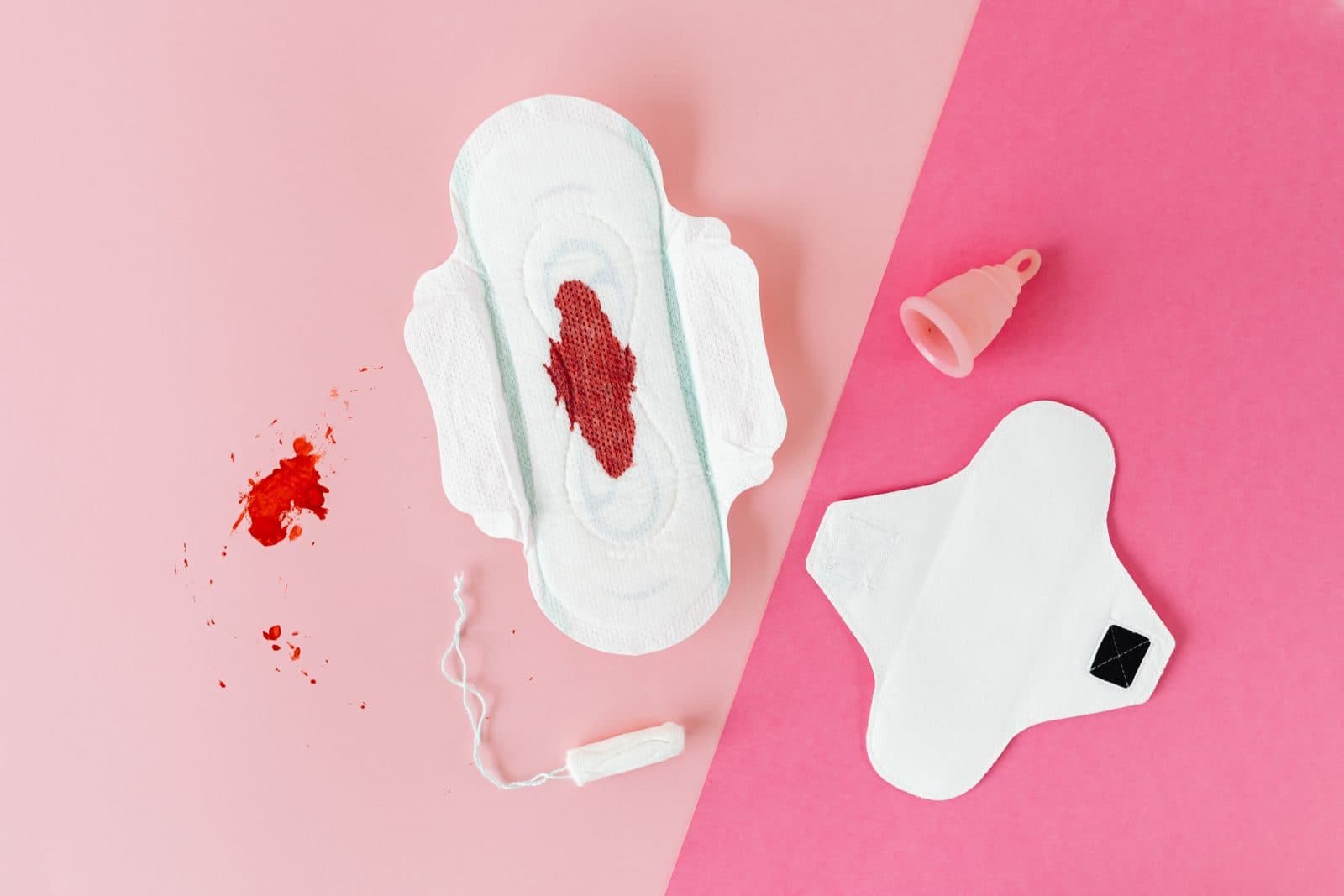
Why there is no number you can measure at home
Textbooks used to define heavy menstrual bleeding as more than 80 millilitres of blood per period. The figure came from laboratory studies that measured the haemoglobin in used pads and tampons, a method nobody uses in a clinic, and it matched poorly with how people felt. Some women losing far less were exhausted and housebound.
So the definition changed. The UK's NICE guideline defines heavy menstrual bleeding as blood loss that interferes with your physical, social, emotional or material quality of life, and tells clinicians to aim treatment at that quality of life rather than at a volume. ACOG, the American College of Obstetricians and Gynecologists, lists practical signs rather than a measurement. The person who decides whether your bleeding is a problem is you; the markers below give you and your clinician a shared language for it.
A period tracker cannot measure blood loss either. Flow logged as light, medium or heavy is a judgement you make, useful because it is recorded on the day rather than remembered a month later.
The signs clinicians use
The NHS, ACOG, the US CDC and the Mayo Clinic each publish markers for heavy bleeding. They overlap almost entirely. Combined, with the thresholds each body gives:
- Soaking through a pad or tampon every hour for several hours in a row. The NHS's everyday version is changing a pad or tampon every one to two hours, or emptying a menstrual cup more often than its instructions recommend.
- Doubling up. Needing a tampon and a pad together because one alone does not hold.
- Bleeding for more than seven days.
- Clots the size of a coin or larger. The NHS says about 2.5 cm, a 10p coin; ACOG, the CDC and the Mayo Clinic say a US quarter, which is the same size. Clots and decidual casts covers what clots do and do not tell you.
- Flooding. Bleeding through to clothes or bedding, or getting up at night to change.
- Missing life. Skipping exercise, taking time off work or study, or planning around your period because of the volume.
- Feeling tired or short of breath a lot. This one is not a sign of the bleeding itself but of what sustained bleeding does to your iron. It has its own section below.
Any one of these is a reason to talk to a GP. Several together across most of your periods is heavy menstrual bleeding by any definition in use today.
Three tests you can run at home
The markers above are the checklist. These are ways to turn them into something you can hand over.
Count and grade your products. Clinicians have used a pictorial blood loss assessment chart since Higham and colleagues published it in the British Journal of Obstetrics and Gynaecology in 1990. You tally each pad or tampon, grade it as lightly stained, moderately soiled or saturated, and add points for clots. In that study a score of 100 or more over one period picked out laboratory-confirmed loss above 80 millilitres with sensitivity and specificity above 80 percent. The CDC publishes a version of the chart on its heavy menstrual bleeding page and suggests filling one in before your appointment. You do not need the official form; a note at each change, with roughly how full the product was, gives a clinician the same picture.
If you use a cup, read it. A menstrual cup is the one period product with volume markings. It is still not a measurement, because menstrual fluid is blood mixed with lining and mucus, but a cup that needs emptying every two or three hours when its instructions say up to twelve is a clear record, and emptying more often than recommended is one of the NHS's own signs.
Time your heaviest stretch. The single most useful fact you can bring is the longest run of hours in which you soaked a product every hour. Two hours is different from six, and six is different from a whole day.
Do this for two cycles if you can. One heavy period can be a one-off; two that look the same is a pattern.
The iron question
Iron deficiency is the quiet part of heavy bleeding. The NHS names heavy periods as one of the commonest causes of iron deficiency anaemia, and NICE tells clinicians to run a full blood count for every woman presenting with heavy bleeding, alongside any treatment, rather than waiting to see whether she seems tired.
The symptoms build slowly, which is why they get put down to a busy life. The NHS lists tiredness, shortness of breath, noticeable heartbeats, paler skin and headaches as the common ones, and among the less common: ringing in the ears, a sore tongue, hair loss, restless legs, and craving non-food items such as ice or paper. If stairs that used to be fine now leave you breathless, that belongs in the same note as your product count.
Iron deficiency is diagnosed with a blood test, not from symptoms. A normal haemoglobin does not always rule out low iron stores, so if symptoms persist it is reasonable to ask whether ferritin was checked. Heavy periods, iron and anaemia goes through the tests, the treatment and what to expect from iron tablets.
What is causing it, and why the cause matters
Heavy bleeding is a symptom with several possible causes, and treatment differs by cause, which is why it is worth investigating rather than only suppressing.
The NHS lists conditions of the womb or ovaries, including fibroids, endometriosis, adenomyosis, pelvic inflammatory disease and polycystic ovary syndrome, conditions that make you bleed more easily such as von Willebrand disease, and some medicines, including anticoagulants. ACOG adds irregular ovulation, in which the lining grows too thick because no ovulation cleared it, common in puberty and perimenopause, and the copper IUD, which can make bleeding heavier especially in the first year; how birth control changes bleeding sets out what to expect from each method. Rarely, heavy bleeding is a sign of cancer of the womb, which is why new or changing bleeding in your forties and beyond is investigated more readily.
Often no cause is found. The CDC's advice is that if a gynaecological check finds nothing, you should be tested for a bleeding disorder. NICE gives a specific trigger: testing for a coagulation disorder should be considered if you have bled heavily since your periods started and you or a close relative have a history that suggests one, such as easy bruising or heavy bleeding after dental work or surgery. If that describes you, say so, because it changes which tests are ordered.
The NHS also notes periods can be heavier when they first start, after pregnancy and approaching menopause. Normal is not the same as untreatable, and perimenopause and period changes covers which changes in your forties still deserve a check.
What an appointment usually involves
Under NICE guidance a GP takes a history covering the bleeding, related symptoms such as bleeding between periods or pelvic pain, and the impact on your life, and arranges a full blood count. With no other symptoms, NICE says medical treatment can start without an examination or investigation. If there are related symptoms or a cause needs ruling out, you may be offered an examination, a pelvic ultrasound, or an outpatient hysteroscopy, in which a thin camera looks at the womb lining. NICE is explicit that female hormone tests are not part of assessing heavy bleeding, and thyroid tests are only done if there are other signs of thyroid disease. A hormone panel offered to explain heavy periods is not what the guideline recommends.
Treatments in the NHS and ACOG lists include the hormonal coil, the combined pill, tranexamic acid taken during the period, and anti-inflammatory painkillers. Specialist options include fibroid removal, endometrial ablation and hysterectomy.
When to get help, and how quickly
Get urgent help today, through emergency services or an emergency department, if you are soaking through a pad or tampon every hour for more than two hours and it is not slowing, if you feel faint, have fainted, or have chest pain or severe breathlessness alongside heavy bleeding, or if you are or might be pregnant and are bleeding heavily with pain, especially shoulder-tip pain. The Mayo Clinic lists soaking at least one pad or tampon an hour for more than two hours as a reason to seek care straight away, and the NHS lists bleeding in pregnancy with shoulder pain, faintness or dizziness among its reasons to call 999. ACOG's guidance on acute bleeding starts with checking for signs of low blood volume, which is what faintness and a racing heart are.
See a GP soon if heavy periods are affecting your life, have been heavy for some time or have recently become heavier, if you have severe pain with them, if you bleed between periods or after sex, or if you have pain when peeing, pooing or having sex. Those are the NHS criteria, and none of them requires the bleeding to be extreme.
Any bleeding after menopause is investigated regardless of amount. It is not a heavy period and should not be tracked and waited on.
What to write down before you go
ACOG suggests keeping a calendar or app record over several cycles before the visit, with the dates bleeding started, how long it lasted and the flow each day as spotting, light, medium or heavy. Add:
- Product count on your heaviest day, and how full each one was
- Your longest hourly stretch, in hours
- Clots — and whether any reached coin size or larger
- Nights you had to get up, and any flooding
- Days you changed plans, missed work, or stayed home
- Tiredness, breathlessness, palpitations or dizziness, with the day noted
- Medicines — painkillers, any anticoagulant, and your contraception, including recent changes
- Your history — whether bleeding has been heavy since your first periods, and any family history of bleeding problems
Record what happened on the day rather than back-filling from a predicted date.
Flowy logs flow as spotting, light, medium or heavy and keeps a free-text note for each day, so a product count or a line about breathlessness has a dated place next to your cycle. You can export your record from the app to take to an appointment, and delete it whenever you choose. Flowy cannot measure blood loss, cannot detect anaemia and does not decide whether your bleeding is a problem. It holds the record; a blood test and a clinician do the rest.
Frequently asked questions
My periods have always been heavy. Does that mean they are fine?
Not necessarily. The NHS says heavy periods may be normal for you, and also says to see a GP if they affect your life or have been heavy for some time. Lifelong heavy bleeding is also one of the two features NICE uses to decide whether to test for a bleeding disorder. Always heavy is a reason to check, not a reason to wait.
How many pads a day is too many?
There is no agreed daily count, because pads vary in absorbency and people change at different levels of saturation. The thresholds in guidance are about rate: soaking through hourly for several hours, changing every one to two hours, or needing two products at once. How full each product was matters more than a daily total.
Can a period app tell me if my bleeding is heavy?
No. An app records what you tell it. It can show that you have logged heavy flow on five days for three cycles running, which is worth noticing, but the judgement of heavy is yours and the diagnosis is a clinician's.
This article is for general education only. It is not a diagnosis, individualised medical advice, or a substitute for care from a qualified healthcare professional.
References
- NHS: Heavy periods
- NHS: Iron deficiency anaemia
- NHS: Vaginal bleeding in pregnancy
- NICE NG88: Heavy menstrual bleeding, assessment and management
- ACOG: Heavy menstrual bleeding
- ACOG Committee Opinion 557: Management of acute abnormal uterine bleeding in nonpregnant reproductive-aged women
- CDC: About heavy menstrual bleeding
- Mayo Clinic: Heavy menstrual bleeding, symptoms and causes
- Higham, O'Brien and Shaw, Assessment of menstrual blood loss using a pictorial chart, British Journal of Obstetrics and Gynaecology 1990